5 Things You MUST Check Before Buying a Home in Nashville!
By Susan Thetford
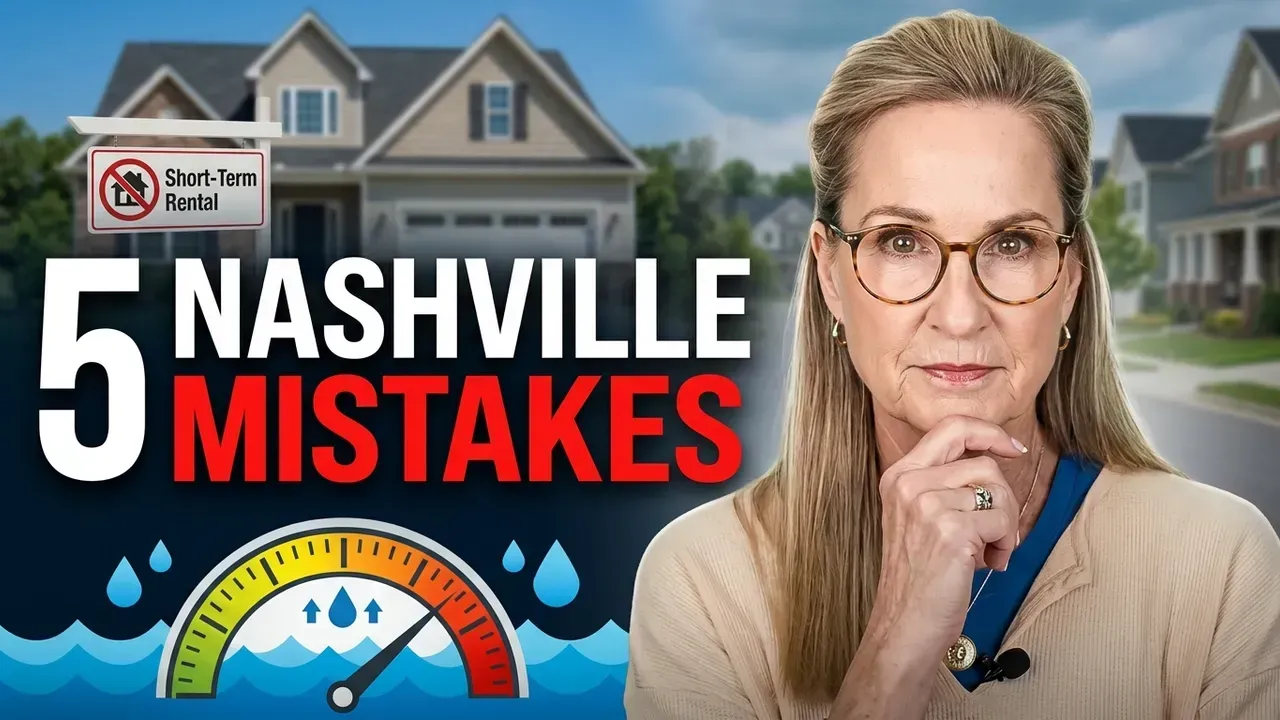
Before buying a home in Nashville or Middle Tennessee, it's crucial to investigate five key areas to avoid significant financial and legal pitfalls. This guide covers everything from short-term rental restrictions and unpermitted additions to HOA health, flood risks, and future zoning changes, ensuring a smooth and informed purchase.
Nashville, Tennessee – Music City, a booming economic hub, and a magnet for new residents. If you're considering making this vibrant city your home, you're not alone. People are flocking here from California, New York, Florida, Texas, and beyond, drawn by its unique charm, growing job market, and diverse real estate opportunities. However, the excitement of relocating to Nashville can sometimes overshadow the critical due diligence required when buying a home in Nashville. Without proper checks, your dream home could quickly turn into a costly nightmare.
As a Nashville relocation expert, I've seen firsthand how hidden issues can derail a purchase, costing buyers thousands or even forcing them to walk away. This isn't just about a standard home inspection; it's about understanding the specific nuances of the Nashville real estate market. Let's dive into the five most important things you absolutely must check before you close on any property in Middle Tennessee.
1. Navigating Nashville Short-Term Rental Restrictions
Understanding Nashville's short-term rental (STR) rules is paramount for any investor or homeowner considering supplementary income, as strict regulations can completely undermine your financial projections. The city of Nashville, officially Metropolitan Government of Nashville and Davidson County, has some of the most complex and evolving Airbnb and short-term rental ordinances in the nation. According to recent city council data, these regulations are frequently reviewed and updated, reflecting ongoing community discussions about neighborhood character and housing availability.
If you're planning to buy a property with the intention of operating it as an Airbnb or other short-term rental, you must verify its eligibility before making an offer. Not all properties qualify. Nashville categorizes STRs, and many residential zones prohibit non-owner-occupied short-term rentals. This means if you don't live on the property, you might not be able to rent it out for short stays. Ignoring these rules can lead to hefty fines, legal battles, and the complete destruction of your investment strategy. Always check the specific zoning and permit requirements for the address you're interested in with the Metro Nashville Codes Department.
2. Uncovering Permit Records for Nashville Homes
Missing or unrecorded permit records for home additions or renovations can expose you to significant safety hazards, legal liabilities, and unexpected financial burdens. When a homeowner undertakes major work like adding a room, finishing a basement, or even substantial plumbing or electrical upgrades, building permits are typically required by the Metropolitan Government of Nashville and Davidson County's Department of Codes Administration. These permits ensure that construction meets safety codes and structural integrity standards.
Unpermitted work, often done to save money or time, can be a ticking time bomb. It might not meet current building codes, posing risks like fire hazards, structural instability, or improper ventilation. If discovered after you purchase the home, you could be forced to bring the work up to code, which can be incredibly expensive and involve tearing down and rebuilding sections. Furthermore, unpermitted work can complicate future sales or even invalidate your homeowner's insurance in the event of a related claim. Always request a full permit history for any property you're considering and ensure all major additions have corresponding, closed permits. This is one of the most important things to check before buying Nashville real estate.
3. Understanding HOA Reserve Funds Nashville Real Estate
A healthy Homeowners Association (HOA) reserve fund is a strong indicator of financial stability, protecting you from sudden, large special assessments for major community repairs. Many properties in Nashville, especially condos, townhomes, and planned communities, are part of an HOA. While HOAs maintain common areas and amenities, their financial health, particularly their reserve funds, is critical. A reserve fund is money set aside for future major repairs and replacements of common elements, such as roofs, roads, swimming pools, or exterior painting.
Before you commit to a property within an HOA, review the HOA's financial statements, especially the reserve study. A well-funded reserve study, typically updated every few years, will show adequate savings to cover anticipated large expenses. If the reserves are low, it's a red flag. It often means that when a major repair is needed – like a new roof for the entire complex – the HOA will levy a "special assessment" on all homeowners. These assessments can run into thousands or even tens of thousands of dollars, hitting you with an unexpected bill shortly after you move in. According to industry experts like the Community Associations Institute (CAI), a healthy reserve fund should ideally be 70% or more funded against its long-term needs to avoid frequent special assessments. Don't let a low monthly HOA fee blind you to potential future costs. For more insights into the broader market, you might find Nashville Home Prices Down 1%? That's Not a Crash — That's a Breather #shorts helpful to understand current market dynamics.
4. Why FEMA Flood Maps Matter More Than Zillow Listings
Relying solely on general real estate listings for flood zone information is a critical mistake; official FEMA flood maps provide the accurate data needed to assess risk and insurance costs. Nashville, with its proximity to the Cumberland River and various creeks, is susceptible to flooding. While a property might appear dry on a sunny day or not be explicitly flagged on a Zillow listing, its true flood risk is determined by its location relative to Federal Emergency Management Agency (FEMA) flood maps.
Why FEMA Flood Maps Matter More Than Zillow Listings has a practical answer that depends on budget, location, and household needs. This means readers can compare the tradeoff quickly before deciding whether the details fit their situation.
5. Investigating Future Development and Zoning Near Your Home
Future development and zoning changes in the immediate vicinity of your potential home can drastically alter its value, noise levels, and overall living experience, making proactive research essential. Nashville is a city experiencing rapid growth and transformation. What might be a quiet residential street today could be slated for commercial development, a new highway, or high-density housing tomorrow. These changes, while sometimes beneficial, can also introduce unwanted noise, traffic, reduced privacy, or block views, directly impacting your property's appeal and value.
Before closing, research the local zoning ordinances and future land use plans for the area around your prospective home. The Metro Nashville Planning Department is the go-to resource for this information. Look for any proposed rezonings, new infrastructure projects, or large-scale developments. A planned apartment complex next door could overshadow your backyard, or a new commercial strip could bring unwanted late-night activity. Understanding these future possibilities allows you to make an informed decision about whether the property aligns with your long-term vision for your home and investment. This kind of foresight is crucial for anyone investing in Tennessee real estate. If you're pondering the timing of your purchase, consider insights from Why You Shouldn't Wait for Nashville Home Prices to Drop #NashvilleHousingMarket #Shorts to inform your strategy.
Why These Checks Are Non-Negotiable for Nashville Homebuyers
Relocating to Nashville or buying a home in Middle Tennessee is a significant life event and a major investment. The allure of a vibrant city and a promising real estate market is strong, but the due diligence required goes beyond superficial appeal. These five checks are designed to protect you from hidden issues that could cost you tens of thousands of dollars, create ongoing headaches, or even force you to sell at a loss.
- Protect Your Investment: Each of these checks directly impacts the financial viability and long-term value of your property.
- Ensure Peace of Mind: Knowing you've thoroughly vetted a property allows you to settle into your new home without the constant worry of unexpected problems.
- Avoid Legal Headaches: Unpermitted work or ignored HOA rules can lead to costly legal disputes and enforcement actions.
- Plan for the Future: Understanding flood risks and future development helps you plan for insurance costs, potential changes to your neighborhood, and the property's appreciation trajectory.
Buying a home in Nashville should be an exciting journey, not a stressful one filled with unwelcome surprises. By taking the time to investigate these critical areas, you empower yourself with the knowledge needed to make a smart, confident purchase.
Frequently Asked Questions (FAQ)
Q: What are the most important things to check before buying a home in Nashville?
A: Before buying a home in Nashville, the five most important things to check are short-term rental restrictions, permit records for any additions, the financial health of the HOA's reserve funds, official FEMA flood zone maps, and future development and zoning plans for the surrounding area.
Q: How do short-term rental restrictions affect Nashville homebuyers?
A: Short-term rental (STR) restrictions in Nashville can significantly affect homebuyers by determining whether a property can be legally used for platforms like Airbnb, potentially destroying investment plans if the property is in a non-owner-occupied STR prohibited zone or doesn't meet specific permit requirements.
Q: Why are permit records crucial when buying a house in Nashville?
A: Permit records are crucial when buying a house in Nashville because they verify that any renovations or additions were completed according to local building codes, preventing safety hazards, legal liabilities, and the potential for expensive mandated repairs or demolition of unpermitted work after purchase.
Q: What hidden costs should I be aware of when buying a home in Nashville?
A: Hidden costs when buying a home in Nashville can include unexpected HOA special assessments due to underfunded reserves, mandatory flood insurance premiums if the property is in a FEMA-designated flood zone, and the expense of bringing unpermitted home additions up to code.
Q: How do flood zones impact property value in Nashville?
A: Flood zones can significantly impact property value in Nashville by increasing ongoing costs through mandatory flood insurance, potentially limiting buyer pools due to perceived risk, and affecting the property's desirability and appreciation potential, even if the home itself has never flooded.
Making Your Move Easier
Moving forward does not have to be overwhelming. With the right guidance and support, you can navigate this journey smoothly. The team is ready to help you every step of the way.
Here's how to get in touch:
📧 Email: susan@susanthetford.com
📞 Phone: 629-280-2622
💻 YouTube: [Living In Nashville Tennessee [The Original!!]](https://www.youtube.com/channel/UCjGn81xP5XNqWnBquNk7FoQ)

Susan Thetford
As a Nashville native, real estate agent, and retired general contractor, I bring a unique perspective to home buying and selling. My background allows me to help clients understand a home’s true potential, costs, and value—beyond what meets the eye.
With my mother-daughter real estate team, we provide a seamless, client-first experience with personalized service and expert guidance.
Read our
Latest Blogs